

This is most appropriate because I am headed to the International Monarch Science Symposium hosted by Monarch Watch in Lawrence, KS this week.
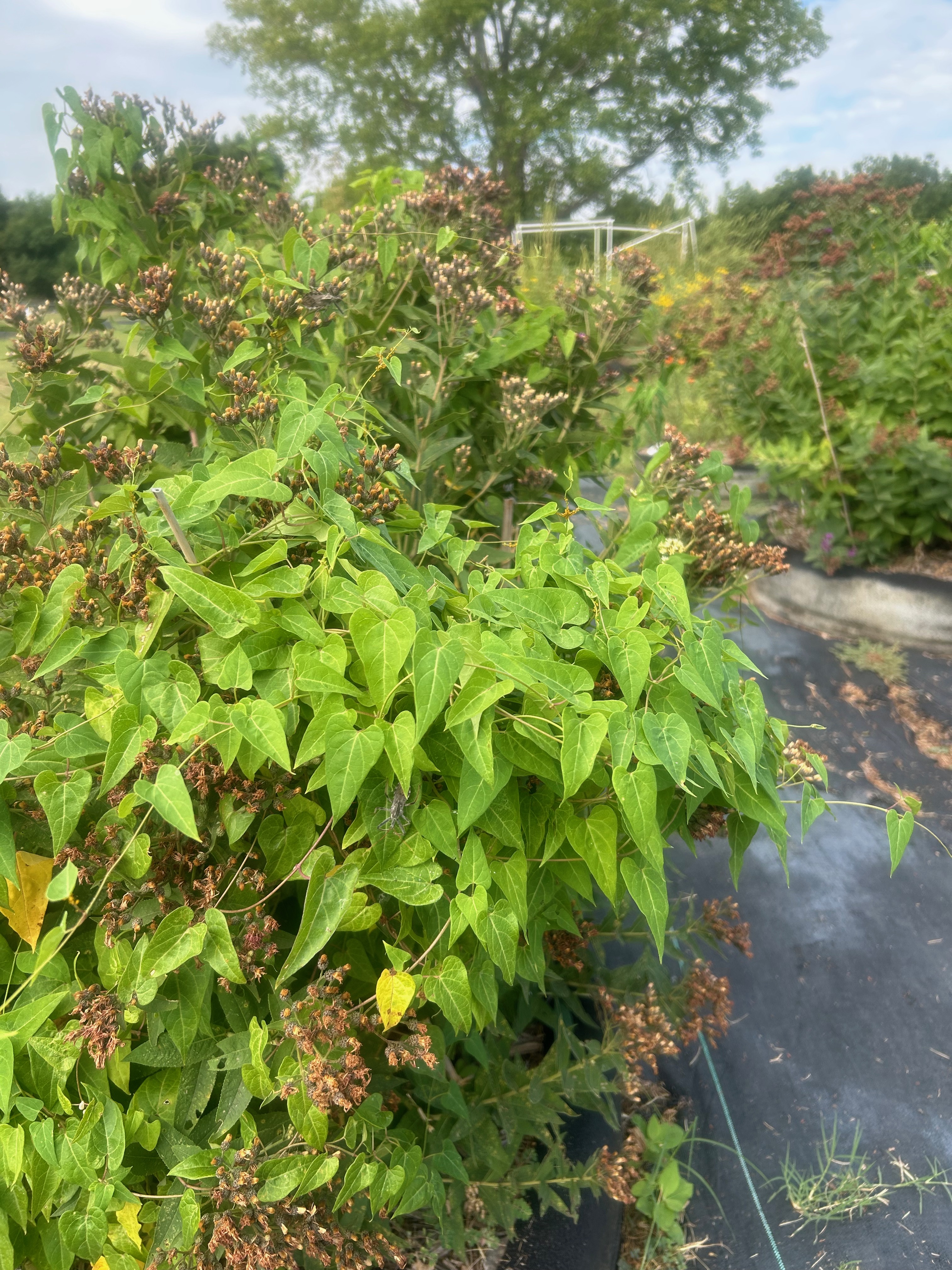
In my lab, we are growing two late summer/fall thriving milkweed species – the native Honeyvine (Cynanchum laeve) and the non-native tropical milkweed (Asclepias curassavica). Students in my lab will be counting eggs and caterpillars over the next few months to see if Monarchs have a species preference during the later summer reproductive season in central Oklahoma.
Many gardeners in Oklahoma plant the tropical milkweed because it has beautiful flowers, it is easy to grow, and it does well all summer long and into the fall. However, some biologists and ecologists are concerned about using this species as a conservation measure for Monarchs for a few reasons. First, it is a not native to the U.S. In fact, it isn’t even native to any region within the range of Monarchs. Second, the species can become toxic to Monarch caterpillars during intensely hot summers. And third, because the plant is long lived, it may harbor diseases such as the parasite OE (Ophryocystis elektroscirrha).
The honeyvine (also called milkweed vine and bluevine) isn’t nearly as showy as the tropical milkweed and has generally be considered a nuisance weed by gardeners in our region. However, it may be the most important milkweed for late season reproduction in central Oklahoma. It is a perennial and takes a couple years to get established and have vigorous growth. The white flowers are small and grow in small clusters that attract a variety of small native bees and butterflies.
Over the next few years, we will see how these two species compare as Monarch host plants!

 Priscilla H. C. Crawford
Leave a comment