

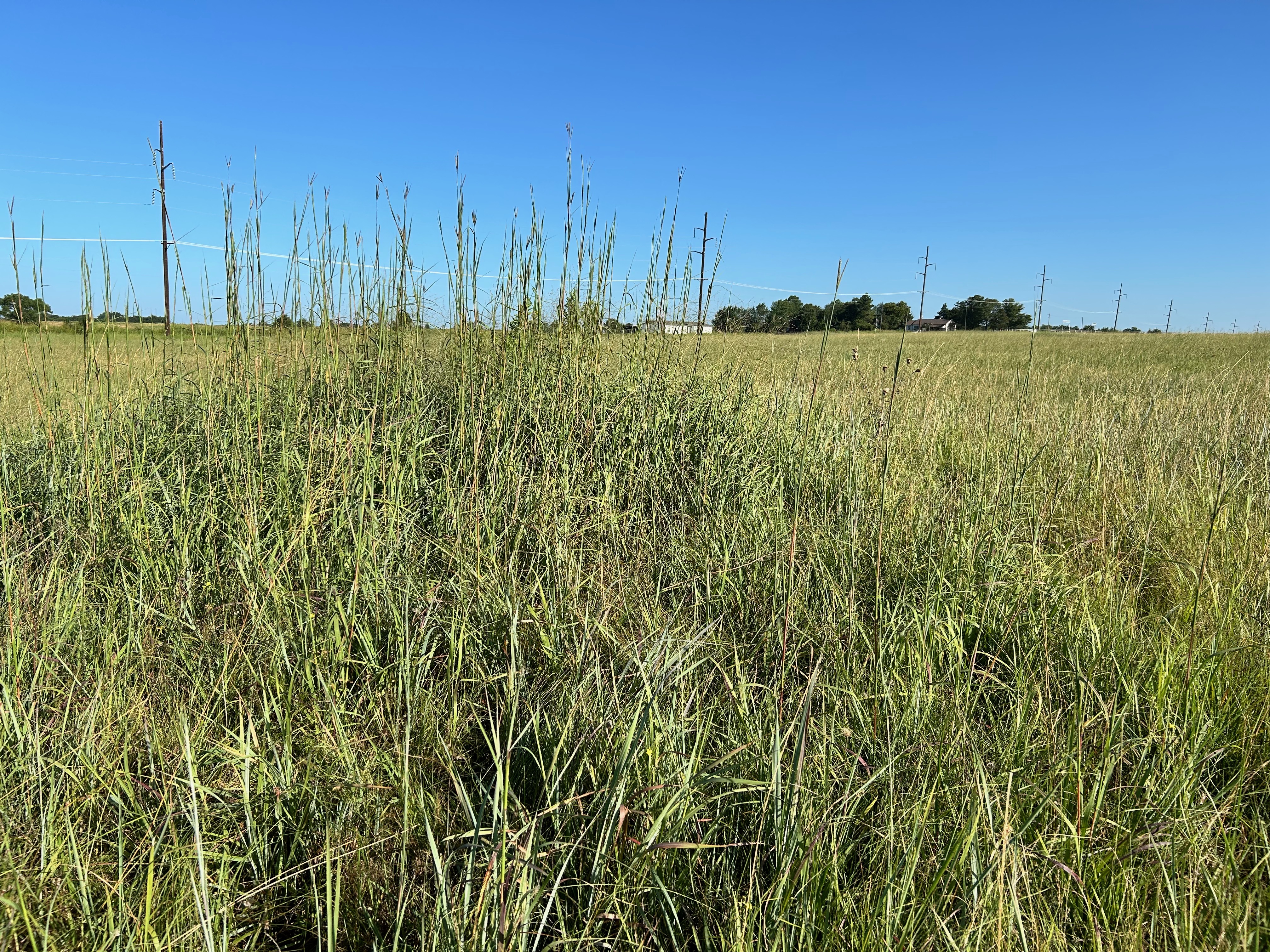
This week, I had the privilege of doing field work at a tallgrass prairie remnant that is one of the best examples of grassland I have seen in southcentral Oklahoma. On the grounds of the Choctaw Cultural Center in Bryan County, this prairie has a diversity of native grasses and wildflowers, few exotic invasive species, and has several mima mounds which indicate that this site has never been plowed.
Mima mounds are bumps on the prairie that, at this site, are about 10-30 feet across and raised 2-5 feet above the rest of the land. The vegetation on the top is a little different than the surrounding prairie because the slight change in topography. Although I didn’t quantify the differences, the mounds at this site had seemed to have different plants in abundance on each – big bluestem on one, blackberries on another, rosinweeds on a couple, etc… (Read more about mima mounds in the Choctaw Nation)
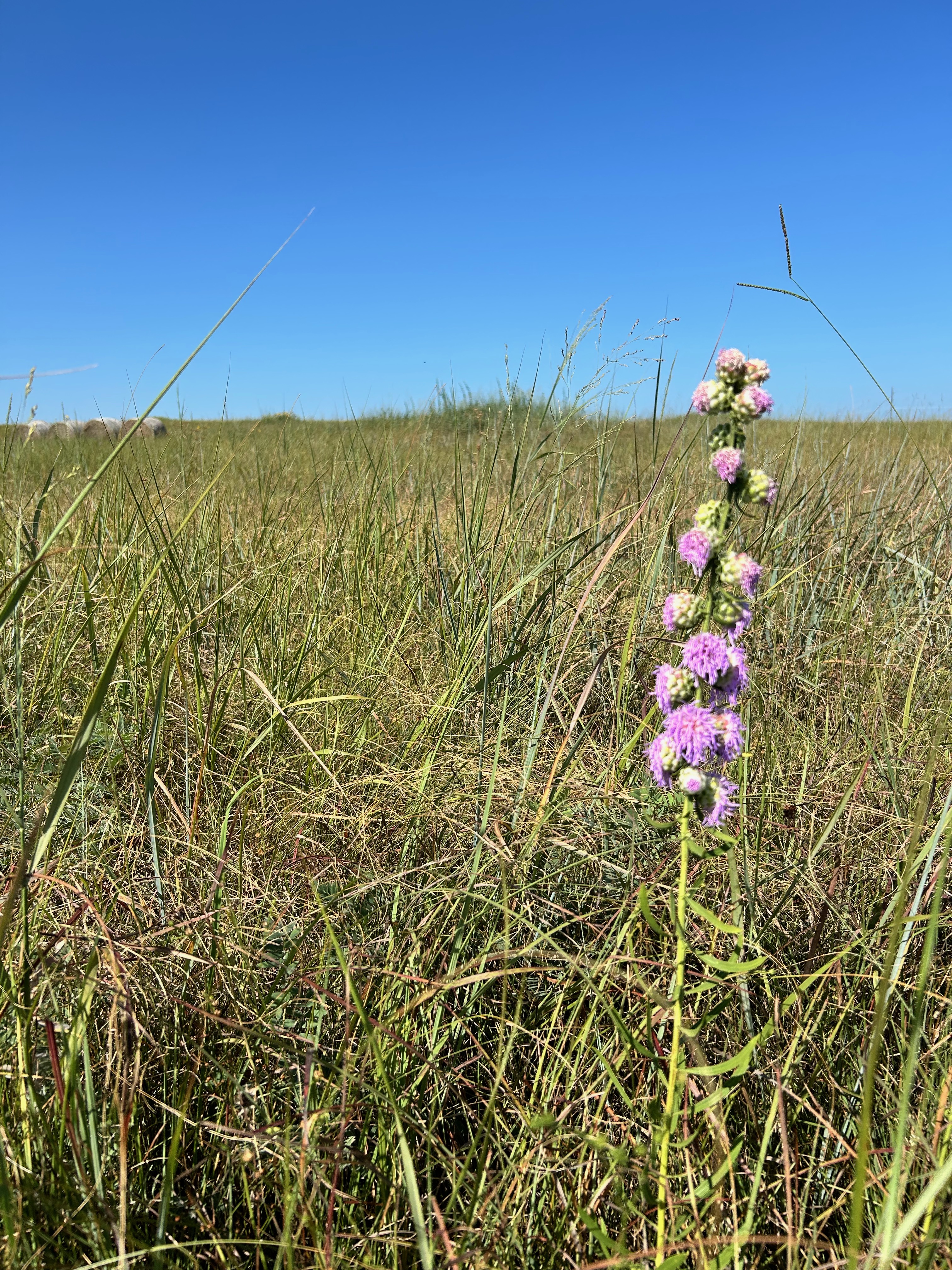
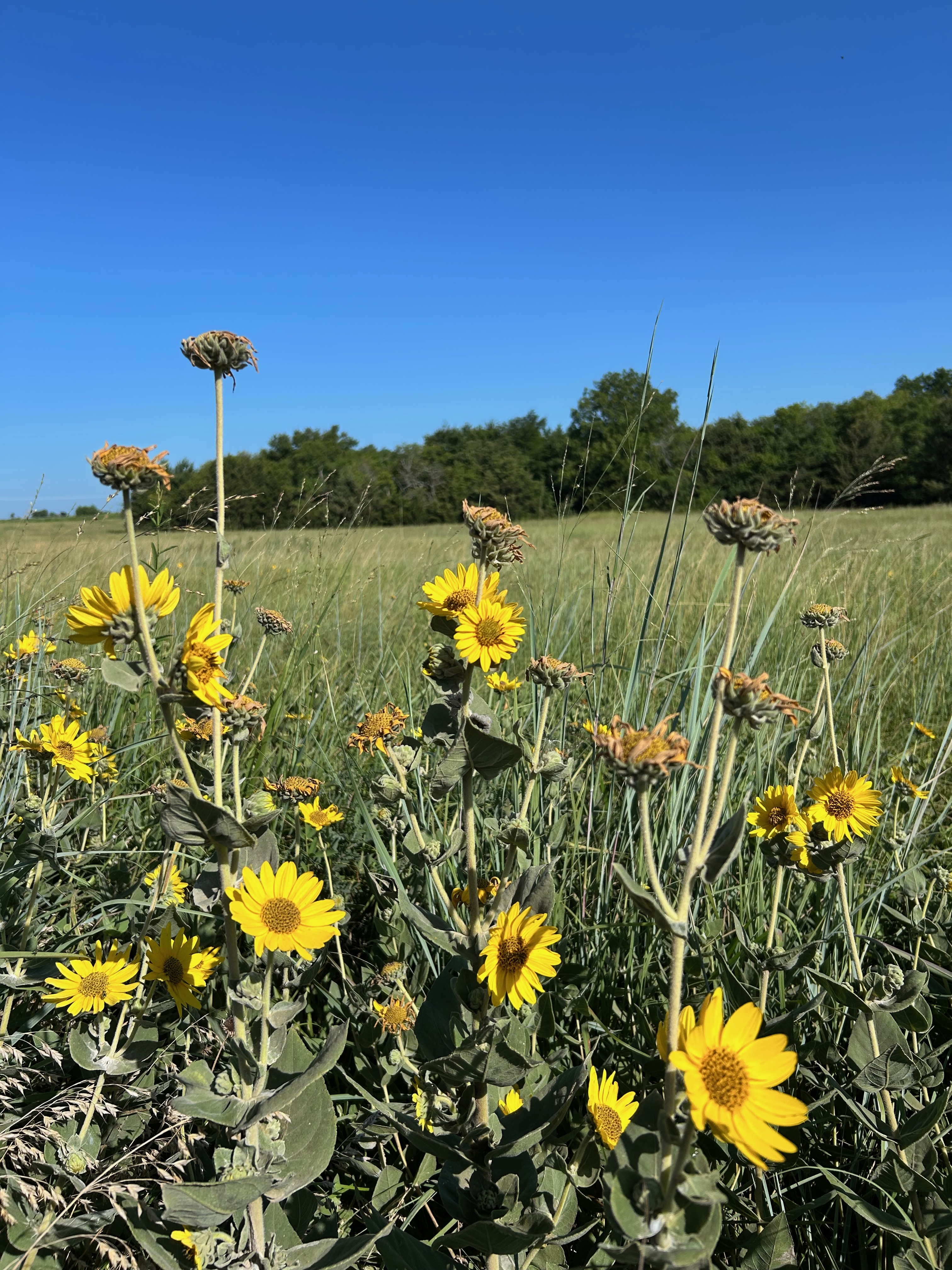
This southern tallgrass prairie site was regularly mowed, sometimes more than once a year, for the past decade or so. However, they have ceased mowing this year to see what prairie species respond. This season, we saw a flurry of early summer blooms. And now in the heat of mid-summer the area is dominated by switchgrass (Panicum virgatum) with just a few wildflowers thriving.
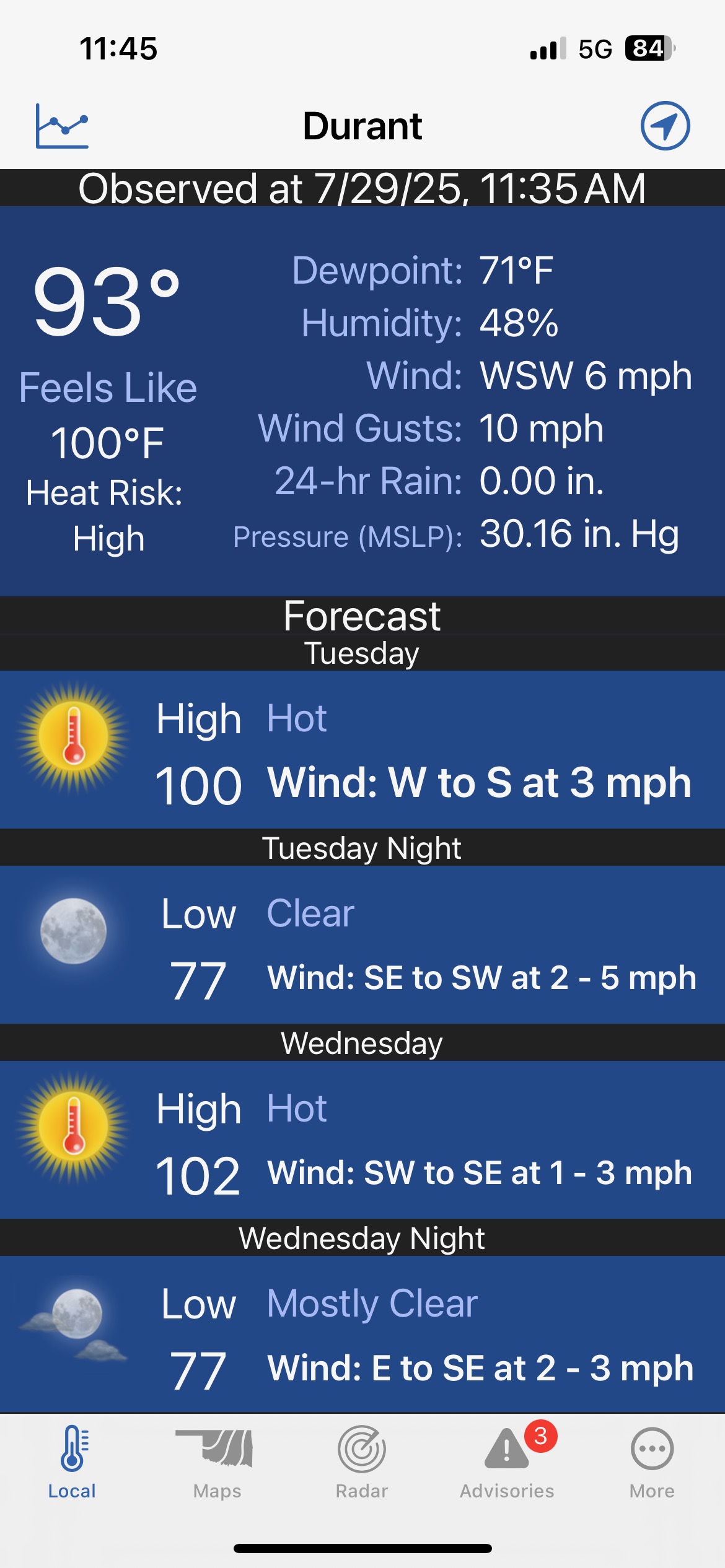
The day was super hot and I was glad to have finished our outside work by noon – just in time to have lunch at the Choctaw Cultural Center’s Champuli Cafe! After lunch, we toured the garden where they are growing several heritage varieties of gourd, squash, corn, beans, and sunflower.


 Priscilla H. C. Crawford
Leave a comment